
Interactive · 3D
How do you catch a rocket?
Spin it, zoom it, tap the numbers. Then hit Run the catch and watch the arms do their thing.
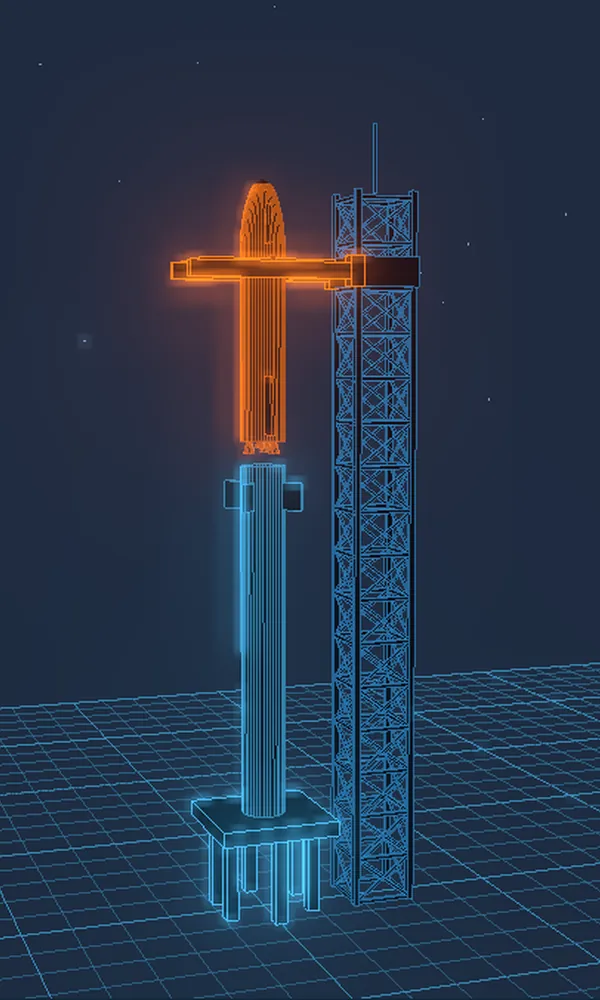
Loading 3D model…
SHIP CATCH · SCHEMATIC- Super Heavy: the booster. The bottom half of the stack. It's 236 feet tall all by itself, and it gets about six and a half minutes to fly back home after launch.
- The heat shield tiles. Coming home, the ship's belly gets hit with thousands of degrees. Those black tiles are the heat shield, basically an oven mitt for the steel underneath.
- The flaps: how it steers. Four flaps, two near the nose and two at the base, steer the ship as it falls back through the air. No wings needed.
- The catch fittings. Here's the trick: the arms never grab the ship's body. There are two catch fittings, people call them catch pins, just below the front flaps. The arms close under them and the ship settles on.
- The chopsticks. SpaceX calls the tower's arms the chopsticks. They swing open, wait for the rocket to slide in almost stopped, then close.
- Six Raptor engines. The ship has six engines. To leave orbit, one engine fires to slow it down just enough. Then the air does the braking.
- The tower (and the crew behind it). The same tower launches the rocket, stacks the ship on the booster, and catches it coming home. That's where our name comes from.
Schematic model, built by us. Proportions follow SpaceX's published sizes and photos; small details are simplified.